Geraniol is one of the most widely used monoterpene alcohols in the flavour and fragrance industry and the signature rose character across countless perfumes and personal care products. It is also a commercial aroma chemical with defined purity grades, clear specification fields, and a growing Indian export footprint. This article explains what geraniol is, how it is produced and graded, where it is used, and what buyers should check before they procure it.
What Is Geraniol?
Geraniol (trans-3,7-dimethyl-2,6-octadien-1-ol) is a naturally occurring monoterpene alcohol with the molecular formula C10H18O, CAS number 106-24-1, and EINECS number 203-377-1. It carries a pleasant, sweet, floral odour resembling rose and is one of the key components of rose, palmarosa, citronella, and geranium oils. Its FEMA number is 2507, which is the reference used for food-application approval.
Within the broader aroma chemicals family, geraniol is often grouped with the floral terpenoids that also include citronellol, its close structural relative, and citral, the aldehyde from which much commercial geraniol is derived. It is produced commercially both by isolation from essential oils such as palmarosa oil and citronella oil and by synthesis from citral.
Global Geraniol Market and Demand Drivers
Geraniol demand tracks the flavour and fragrance sector closely. Its global search demand is led by a strong head keyword, while commercial long-tail terms — geraniol exporter, manufacturer, and supplier searches — are heavily India-weighted, reflecting the country's established essential-oil and aroma-chemical trade.
Demand is underpinned by four structural drivers:
- Fine fragrance: rose and floral accords remain perennially popular in perfumery, and geraniol is a workhorse rose note.
- Functional fragrances: soaps, detergents, shampoos, and household cleaners use geraniol at industrial volumes.
- Flavour applications: geraniol appears as a flavouring agent in chewy sweets, chewing gum, baked goods, and beverages.
- Wellness and personal care: growing demand for natural ingredients favours the naturally derived grades, in line with trends tracked across the cosmetics and personal care and aromatherapy and wellness industries.
The broader market context — clean-label reformulation, natural-vs-synthetic positioning, and the supplier quality agenda — is covered in our global chemical trends 2026 review and the essential oils manufacturing trends analysis.
How Geraniol Is Produced
Geraniol reaches the market through two commercial routes, and the route determines both price and label positioning.
Naturally Derived Geraniol
Natural geraniol is isolated by fractional distillation, typically from palmarosa oil, citronella oil, and rose or geranium processing streams. Palmarosa oil, in particular, can carry 70–85% geraniol and is the classic natural source. Naturally derived grade qualifies for natural-label claims and is preferred by premium fragrance houses, aromatherapy brands, and clean-label personal care producers.
Synthetic / Nature-Identical Geraniol
Commercial nature-identical geraniol is produced industrially from citral, itself derived from lemongrass oil or produced by synthesis. This route provides consistent, scalable supply at lower cost and dominates high-volume functional fragrance and flavouring applications. Chemically identical to the natural molecule, it is approved for food flavouring use under its FEMA number.
For an explanation of how these distinctions play out in labelling and compliance, see our coverage of aroma chemicals in flavour and fragrance and the regulatory compliance guide for aroma chemicals.
Geraniol Purity Grades and Specifications
Geraniol is sold on assay, source, and impurity profile. The principal specification fields on a geraniol certificate of analysis include:
- Assay (GC): typically 90% min for commercial grades, 95–98% min for premium grades; nature-identical grades commonly 99%.
- Appearance: colourless to pale yellow clear liquid.
- Odour: sweet rose, floral, slightly citrus.
- Refractive index: typically 1.470–1.480 at 20°C.
- Specific gravity: typically 0.875–0.885 at 25°C.
- Solubility: miscible in ethanol; practically insoluble in water.
- Citronellol content: often specified, since citronellol is a common co-component.
- Acid value: low, typically max 1.0.
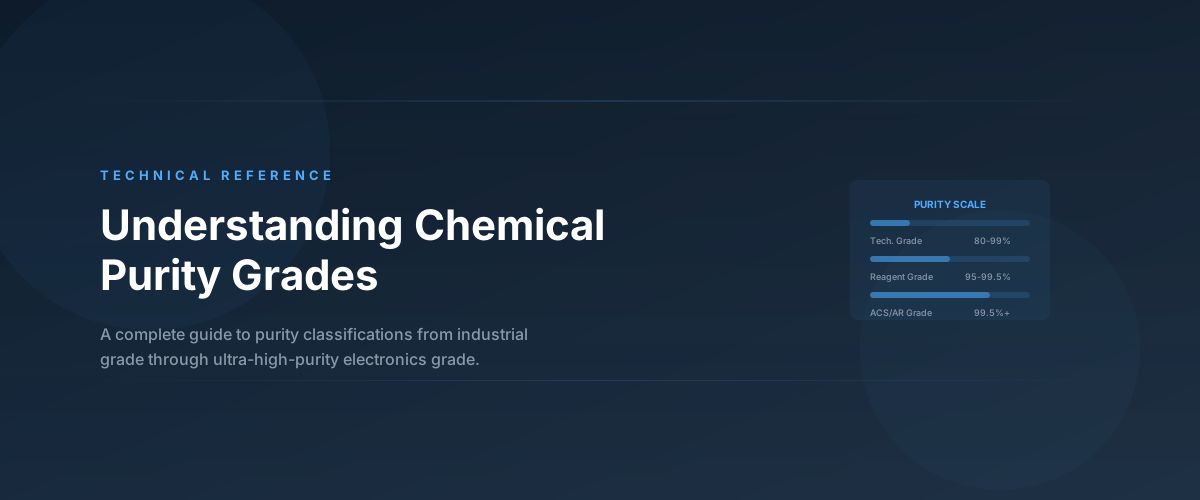
Geraniol and its companion products sit alongside benzyl acetate, benzyl benzoate, and the wider aroma chemicals range for the flavour and fragrance trade. Buyers unfamiliar with specification validation should work through understanding chemical purity grades and the analytical verification workflow in quality control for imported chemicals.
Key Applications of Geraniol
Fine and Functional Fragrance
Geraniol is a foundational rose note in fine perfumery and is used widely in functional fragrance applications — soaps, shampoos, body washes, detergents, and household cleaners — where its floral profile survives the finished-product base. IFRA restricts maximum use levels in certain leave-on categories, so formulation buyers must verify their use concentration against the standards summarised in aroma chemicals in flavour and fragrance.
Flavour Applications
In flavouring, geraniol contributes rosy, citrus-mint nuances to chewing gum, hard and chewy confectionery, baked goods, and alcoholic and non-alcoholic beverages. Flavour applications are covered in more depth in aroma chemicals in food and beverage.
Personal Care and Natural Products
Natural-grade geraniol is increasingly specified by cosmetic and aromatherapy brands seeking natural positioning. Its skin-sensitisation profile means finished-product labelling must be checked, and buyers should confirm the documentation a market demands — a topic our regulatory compliance guide expands on.
Geraniol From India: The Export Advantage
India is a natural home for geraniol trade because it is a leading grower and processor of palmarosa, citronella, and lemongrass oils, which are the key natural feedstocks. Indian suppliers combine:
- Raw material access: domestic palmarosa and lemongrass cultivation supports natural-grade production.
- Manufacturing capability: established distillation and fractionation infrastructure across the essential-oil and aroma-chemical belt.
- Export readiness: mature documentation, packaging, and logistics for global buyers, described in our chemical export documentation guide for India.
- Cost advantage: competitive processing costs versus Western European producers while maintaining the quality bar demanded by the fragrance trade.
Buyers sourcing geraniol from India should still apply standard supplier-vetting discipline. Our how to choose the right chemical supplier guide and the how to evaluate chemical suppliers checklist provide a practical framework, and trade terms are covered in chemical trade incoterms.
How to Buy Geraniol: A Buyer's Checklist
- Define the required grade: natural (from palmarosa/citronella) or nature-identical (from citral).
- Specify the minimum assay — 90%, 95%, or 98% — and confirm against the COA.
- Request a certificate of analysis and verify refractive index, specific gravity, acid value, and citronellol content.
- Confirm IFRA use-concentration guidance for your finished-product category, using regulatory compliance for aroma chemicals as reference.
- Agree packaging — typically 25 kg or 200 kg HDPE drums — and check packaging standards.
- Fix incoterms, payment terms, and lead time via our letter of credit and payment terms guide.
Zentish Exim supplies geraniol and the wider aroma chemicals portfolio for the global flavour and fragrance industry, with natural and nature-identical grades, export-grade documentation, and flexible packaging. Send your specification and target market to receive a personalised quotation.
Frequently Asked Questions
What is geraniol?
Geraniol is a naturally occurring monoterpene alcohol (C10H18O, CAS 106-24-1) with a sweet, rose-like floral odour. It is a key component of rose, palmarosa, citronella, and geranium oils and is sold both as a naturally derived and a nature-identical aroma chemical.
What is geraniol used for?
Geraniol is used in fine and functional fragrance (rose accords in perfumes, soaps, detergents, cosmetics), as a flavouring in confectionery and beverages, and in aromatherapy and natural personal care products.
What is the CAS number for geraniol?
Geraniol has CAS number 106-24-1 and EINECS number 203-377-1. Its FEMA number is 2507, which covers its approved use as a flavouring substance.
What is the difference between natural and nature-identical geraniol?
Natural geraniol is isolated by distillation from essential oils such as palmarosa or citronella and can carry natural-label claims. Nature-identical geraniol is produced from citral by synthesis; it is chemically identical but does not qualify for natural labelling in most markets.
Is geraniol safe in cosmetics?
Geraniol is an approved fragrance ingredient with IFRA use-level restrictions, particularly in leave-on cosmetics, due to its skin-sensitisation potential. Formulators must verify use concentrations against the current IFRA code.
Where can I buy geraniol from India?
Indian aroma-chemical exporters supply natural and nature-identical geraniol with full certificate-of-analysis documentation. Zentish Exim offers geraniol and allied aroma chemicals for export, confirming grade and specification before dispatch.


0 Comments
No comments yet. Be the first to share your thoughts!
Leave a Comment